
Interiors is a visual category, and visual categories punish amateur presentation immediately. Shoppers scroll past anything that looks assembled in a hurry. They rarely explain why, and they never come back. A home decor ecommerce store therefore lives or dies on its first screen. That screen is expensive to produce well, which is why so many promising shops never open. Finished assets remove the expense without removing the standard. This article looks at what actually sits behind a credible interiors shop, which parts buyers notice, and how a solo founder can launch without a design budget or a photographer on retainer. Presentation is the product here. Everything else follows from it. The gap is smaller than most founders assume.

Four things carry the launch: a catalog, a storefront, a brand mark, and photography. Miss one and the whole thing wobbles. A beautiful design with nothing to sell converts nobody. A strong catalog on a broken page performs equally badly. The asset pack supplies all four together, which is the point of buying a bundle rather than assembling pieces. Styling handbooks, room planning titles, and seasonal editions arrive already written for this audience. Founders exploring interior design digital products often underestimate how long the writing alone takes. Months, usually. That time is already spent. Your attention moves to selling instead.
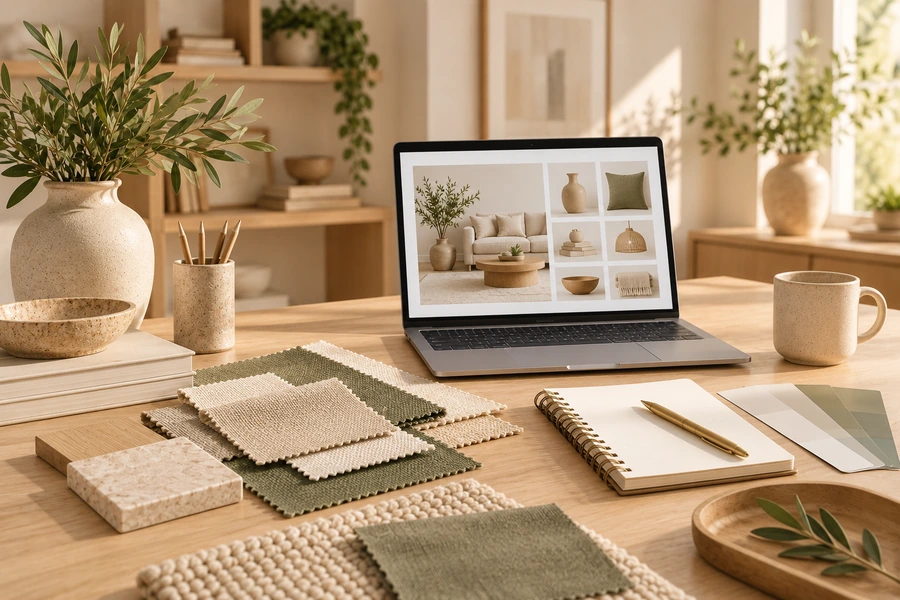
Interiors shoppers read composition before copy. Spacing, palette, and photographic consistency communicate taste instantly. Inconsistency reads as carelessness, and carelessness reads as risk. The supplied store design resolves this with a homepage, product pages, and editorial sections where every headline and layout is already finished. Photography from the design arrives separately as high-resolution files, so you can reuse each image across posts, ads, and email. A wordmark holds the header, the covers, and every profile together. Sellers listing wall art printables benefit particularly, since those products sell almost entirely on presentation. The visual standard stays stable as the catalog grows. Stability is what buyers eventually call a brand. Buyers rarely name it, but they respond to it.
Digital titles suit interiors better than most people expect. Room-by-room styling collections, color palette editions, small-space solutions, and seasonal refresh titles all sell reliably. Each solves a decision the buyer is already stuck on. Physical inventory can follow later once demand is proven. Starting digital keeps risk near zero and margins high, because delivery costs nothing after the first upload. Founders comparing dropshipping home decor against downloadable products usually find the latter simpler to run alone. No suppliers. Damaged shipments stop being your problem. Customs surprises never appear in December. Risk stays where a new founder can carry it.
Bundling works unusually well in this niche because rooms connect. Somebody buying a living room edition frequently wants the bedroom one next month. Offer both together at a modest saving and average order value climbs immediately. Seasonal packaging lifts it again, since interiors demand spikes around spring cleaning and the winter holidays. Because every file stays yours permanently, you can rearrange the catalog as often as you like without new production. Test one structure, measure it, then try another. The store design accommodates either arrangement without a redesign. Buyers rarely notice the mechanics, but they feel the sense of a shop that knows what it sells. That confidence is what closes the second purchase. Second purchases decide whether a shop survives.
Discovery in interiors runs through images. Short room tours, before-and-after reveals, and single-object styling clips all perform well across platforms. Reuse the supplied photography instead of shooting weekly, then add your own work as the shop grows. Written content still earns steady search traffic, particularly practical pieces about small rooms and rentals. Publish the editorial sections that ship with the design and expand them over time. Answer one question per piece and link it to a relevant title. Readers looking for home styling tips arrive with intent and convert well. Consistency of publishing beats volume here. Rhythm matters more than reach. Publish something small every week.
Interiors demand is not flat across the year, and ignoring that costs sales. Spring brings refresh projects, decluttering, and lighter palettes. Autumn brings texture, warmth, and entertaining. December belongs to gifting and small decorative purchases. January returns to organization and storage. Publishing against those rhythms doubles the impact of the same file. Prepare each collection six weeks before its window opens, since search interest builds gradually. Reuse the supplied photography to dress seasonal landing pages quickly. Retire a collection when its season ends and republish it the following year. The catalog then works on a calendar rather than on impulse.

The first month should test positioning rather than chase revenue. Watch which titles sell and which pages hold attention. Adjust the homepage to lead with the winner. Build an email list from a free palette or checklist download, then sell seasonally to that list. A home decor ecommerce store compounds through repeat buyers, because interiors projects never finish, and it pairs naturally with a home organizing business done for you. Add physical products only when digital demand proves the audience exists. Reuse the brand mark across every new channel, including short video formats like trip planning videos ready to publish, so recognition accumulates. Track revenue per subscriber rather than follower counts, a rule that holds just as firmly in niches such as home workouts with no gym required. Outcomes depend on effort and market conditions, and nothing here is guaranteed, but the build stage no longer costs a season. Momentum favors the founders who launch early.







Leave a comment