
Travel publishing has quietly split into two businesses. One depends on flights, sponsorships, and enormous audiences. The other depends on a catalog and a checkout. The second group rarely appears in the first group’s comment sections, yet it earns more predictably. They sell a digital travel planner as a product rather than chasing display advertising. Readers pay because a tested route saves hours of scattered research. The transaction is simple and the margins are high. This article covers how that business is structured, what buyers expect for their money, and which assets remove the longest part of the setup. Accuracy is the one ongoing obligation. Everything else is publishing.

Free information is abundant, which is exactly why people pay for curation. Planning a trip means reconciling forty tabs, half of them outdated. A guide that decides for the reader removes that labor completely. Value comes from judgment rather than from volume. Specificity drives the price: a four-day route for one island outsells a survey of a whole country. Buyers searching for a printable travel itinerary want the decision made rather than the options listed. Give them timings, costs, and a realistic pace. Include the parts that usually go wrong. Honesty about weak spots builds more trust than enthusiasm does. Readers return to sources that admit limitations.
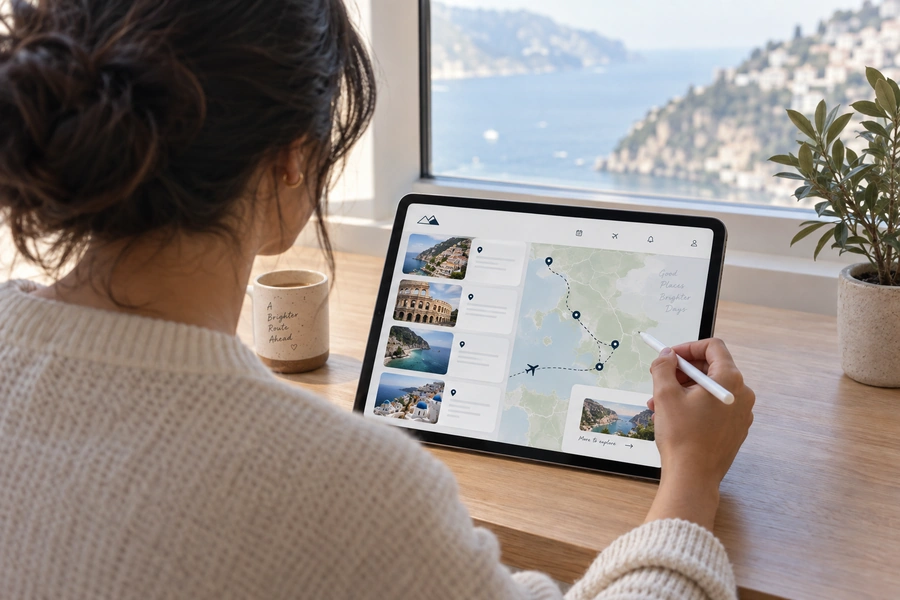
Presentation decides whether a price looks reasonable at a glance. Travel is a visual category, so weak photography undermines even excellent writing. The asset pack ships a complete HTML storefront where every headline and layout is already finished. Product pages carry pricing, descriptions, and working buy buttons from the start. A reading rail holds editorial articles that keep the store alive between launches. The image library delivers each destination photograph separately at full resolution for reuse anywhere. A wordmark ties the header, the covers, and the profiles together. Sellers who would otherwise buy city guide templates and fill them manually skip that stage entirely. Everything stays editable if your palette differs. Consistency across pages is what reads as credibility.
Profit depends on repeat purchase more than on the first sale. One destination earns once, while a region earns for years. Build around a country or a travel style rather than a single city. Pricing usually settles between twelve and thirty-five dollars, with multi-destination bundles reaching higher. Delivery is instant, so margins stay high and support stays light. Accuracy is the recurring cost, since prices and operators change every season. Update the catalog annually and say so on the product page. Buyers forgive an old photograph but not an outdated ferry schedule. Reliability becomes the reason they come back. Repeat buyers carry this business far more than first-time ones.

Distribution matters as much as the catalog itself. Short video performs well here because destinations sell themselves visually. Reuse the supplied photography across posts, pins, and email headers rather than shooting weekly. Written content still earns steady search traffic, particularly practical pieces about budgets, transport, and timing. Publish the articles that ship with the design, then expand them month by month. Answer one narrow question per piece and link it to the matching guide. A travel content creator with a small but specific audience often outsells a large general one. Intent beats reach in almost every case. Collect email addresses from a free single-day itinerary. That list then carries revenue between seasons, which is where predictability finally arrives.
The technical setup rarely takes more than an evening. Upload the catalog, set prices, and connect a payment processor. Run one test purchase yourself, end to end, before announcing anything. Check the layout on a phone, since most trip planning starts there. Publish two editorial pieces so the store does not look empty on arrival. Then stop editing and open, because real buyers reveal problems no rehearsal will. Sellers chasing passive income for travelers often delay launch for months polishing details nobody notices. Progress beats polish in the first quarter. Fix what buyers actually flag. Their questions are better research than any survey.
The buyer is rarely a dreamer browsing for inspiration. He has dates booked and a week to plan. That urgency shapes everything about the product. Long scene-setting introductions irritate him. Vague recommendations without prices irritate him more. Give him timings, costs, walking distances, and a realistic daily pace. Travel style matters too, since a budget backpacker and a family of four need different documents. Naming the audience on the cover raises conversion noticeably. Specific readers feel understood, and feeling understood closes the sale. Write for one kind of trip rather than for everyone.
Expansion should follow demand rather than personal interest. Watch which destinations sell and add neighboring ones. Seasonal timing matters, so publish six weeks before each booking window opens. Add formats gradually: a printable version, a phone-friendly edition, a planning spreadsheet. Each addition sells to the same buyer, which keeps acquisition costs flat. Some sellers eventually license their catalog to tour operators or hotels. Others stay small deliberately and keep the margins. Both outcomes beat waiting three years for advertising revenue. Track revenue per subscriber instead of follower counts. Results depend on effort and market conditions, and nothing here is guaranteed, but the writing bottleneck disappears immediately.







Leave a comment