
A summit photograph collects attention and almost never collects money. That gap frustrates thousands of capable outdoor creators every year. Adventure travel content converts only when something sits behind it that a reader can buy. Routes, permits, gear lists, and altitude planning all represent genuine research that people pay to skip. The audience is unusually motivated, because a badly planned trek costs far more than a document. Selling to them requires a storefront rather than a follower count. This article covers what that storefront needs, which products this niche actually buys, and where the assets come from without months of building. The work that remains is smaller than most creators expect. Accuracy is the one ongoing obligation. Everything else is publishing.

General travel audiences browse, while adventure audiences plan. Somebody preparing a multi-day trek has dates, a budget, and a long list of unresolved questions. That urgency changes the economics completely. Impressions matter less than intent, so a small audience can support a real business. Specificity drives the price: one route, one season, one difficulty level. Creators selling hiking itinerary printables often outperform accounts ten times their size. The reader wants decisions removed, not options listed. Give timings, elevation, water points, and honest warnings. Risk information is what separates a paid document from a blog post. Trust follows accuracy in this category more than anywhere else.
Outdoor readers judge credibility quickly and unforgivingly. A shop that looks improvised suggests the routes were improvised too. Presentation therefore carries weight far beyond aesthetics. This pack ships a complete HTML storefront with every headline written and every layout finished. Product pages carry pricing, descriptions, and working buy buttons from the first hour. An editorial section holds articles ready to publish, which solves the opening month of content. The image library delivers each landscape and gear photograph separately at full resolution. A wordmark holds the header, the covers, and every profile together. Sellers assembling outdoor gear checklists and a shop simultaneously usually finish neither. Here both arrive together. Everything stays editable if your palette differs.
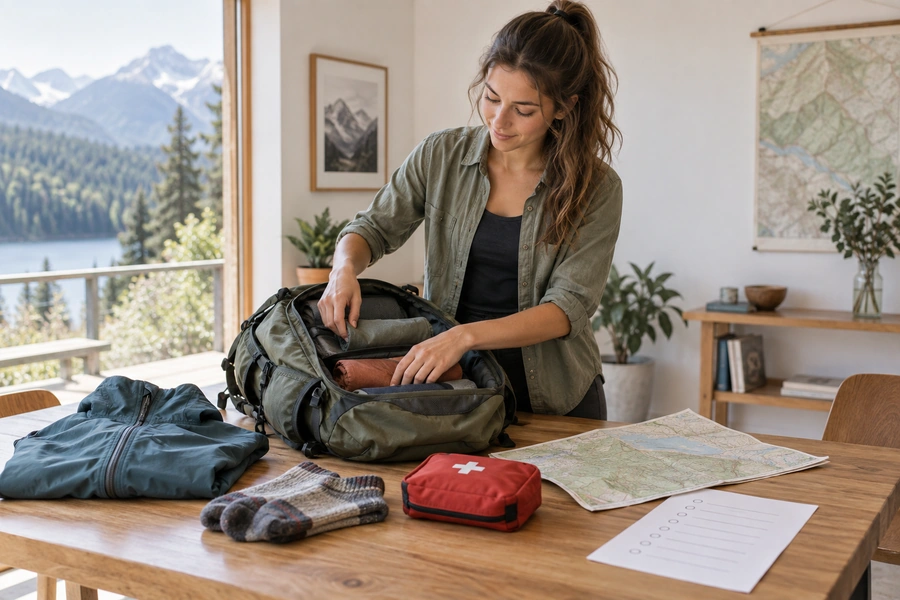
The strongest products answer a question with real consequences attached. Route plans with daily distances sell reliably. Permit and logistics references sell to anyone facing a bureaucratic process. Packing systems for specific climates sell because weight matters and mistakes hurt. Safety briefs for altitude, cold, or remote areas carry obvious value. Each one removes a risk rather than adding inspiration. Sellers running an adventure travel blog already answer these questions for free every week. Packaging that knowledge is the entire transition. Keep each title focused on one trip type. Broad collections convert worse than narrow ones here.

Accuracy is the recurring obligation, and it deserves an honest mention. Trail conditions change, permits get restricted, and operators close between seasons. Publishing an outdated water source is not a cosmetic error in this niche. Review the catalog annually and state the revision date on every product page. Buyers forgive an old photograph and never forgive stale logistics. That discipline becomes a selling point rather than a burden. Pricing usually settles between fifteen and forty-five dollars for a substantial route document, with regional bundles reaching higher. Delivery is instant, so margins stay high and support stays light. Many sellers add trip planning templates as a free offer to build an email list. That list then carries revenue between seasons, which is where predictability finally appears.
Adventure demand follows a calendar with unusual precision. Alpine seasons, monsoon windows, and permit ballots all create predictable spikes. Publish six weeks before each window opens, since planning starts well before departure. Short video suits the category naturally, because landscapes hold attention without narration. Reuse the supplied photography for thumbnails, pins, and email headers rather than shooting constantly. Written pieces still earn steady search traffic for years, particularly practical ones about permits and costs. Answer one narrow question per article and link it to the matching product. Search rewards specificity here more than volume. A modest catalog with precise targeting beats a sprawling one. Consistency across seasons is what compounds.
The first title should prove the positioning rather than showcase your range. Choose one route, one season, and one difficulty level. A four-day trek with permits and water points qualifies. A general overview of a whole mountain range does not. Test it for a full season before writing anything else. Watch whether buyers finish it, review it, and ask about the next region. Those signals matter more than early sales volume. If the title stalls, the audience was wrong rather than the market. Adjust the trip type before adjusting the price. Outdoor readers are generous buyers when the document matches their exact plan.
The first season should test positioning rather than chase reach. Watch which routes sell and which questions arrive repeatedly in messages. Those repetitions are product briefs written by your readers at no cost. Expand into neighboring regions rather than unrelated ones, since the same buyer returns. Add formats gradually: a phone-friendly edition, a printable version, a planning spreadsheet. Each addition sells to an existing customer, which keeps acquisition flat. Some sellers eventually license material to operators or outfitters. Others stay independent and keep the margins entirely. Track revenue per subscriber instead of follower counts, because that number tells the truth. Outcomes depend on effort and market conditions, and no asset pack guarantees income. The build stage, however, stops standing in the way.







Leave a comment