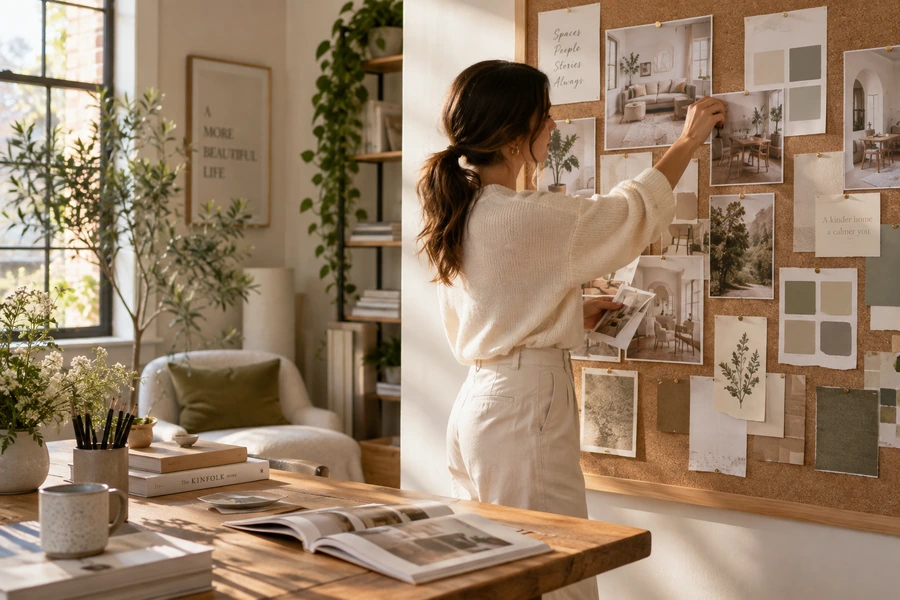
The format looks effortless from the outside. A room, a slow pan, a reveal, and thousands of views. What the clip hides is the staging, the lighting, and the four hours of editing behind ninety seconds. An interior design influencer posting daily is running a small production studio, and most people cannot sustain it. This pack approaches the problem differently, supplying a signature AI creator with ready-made clips alongside a finished storefront. The posting schedule stops depending on whether your own living room looks camera-ready. This article covers how that works and where judgment still belongs to you. Saturation is the real obstacle in this category. Angles matter more than production value. Choosing one early decides everything afterward.

Interiors is one of the most saturated visual categories on every platform. Beautiful rooms are abundant, so individual posts rarely break through. Reach comes from frequency and from narrow angles rather than from production value. Accounts that post four times a week outperform those posting one polished piece. That pace is exactly what most founders cannot maintain alongside building a shop. Creators searching for home decor content ideas usually have plenty of ideas and no capacity. Capacity is the actual constraint. Removing the filming stage solves it directly. Scheduling replaces production entirely. Your evenings return immediately.
Attention without a destination earns nothing. The bundle supplies the destination as a complete HTML storefront with every page written and laid out. Product pages carry pricing, descriptions, and working buy buttons from the start. An editorial section keeps the store alive between launches with styling pieces ready to publish. The image library delivers each interior photograph separately at full resolution for reuse across posts and email. A wordmark holds the header, the covers, and every profile together. Founders who would otherwise spend weeks producing room styling videos and a shop simultaneously get both in one download. Everything stays editable if your palette differs. The pieces agree with each other, which is what reads as a brand. Visitors register that agreement without naming it.
Digital titles suit interiors better than most people expect. Room-by-room styling collections, color palette editions, small-space solutions, and rental-friendly guides all sell reliably. Each removes a decision the viewer is currently stuck on. Rentals deserve particular attention, since that audience is large and underserved by aspirational content. Seasonal editions perform predictably around spring refreshes and winter entertaining. Titles built around home staging tips also attract sellers preparing a property, which is a different buyer with real urgency. Urgency converts. Pick the audience deliberately rather than posting for everyone. Narrow audiences forgive small catalogs. Broad ones never do.

Pricing usually settles between twelve and thirty-five dollars for a single edition. Bundles reach higher without adding fulfillment work, since delivery is instant after checkout. Two connected rooms priced together feel generous rather than expensive, and average order value climbs immediately. Seasonal framing lifts it again at almost no cost. Because every file stays yours permanently, the catalog can be rearranged endlessly without new production. Test one structure for a month, measure it honestly, then try another. Collect email addresses from a free palette download so the audience belongs to you rather than to a platform. That list carries revenue between seasons. Founders focused on interiors brand building often overlook email entirely. It outlasts every feed change.
Synthetic media must be labeled, and platforms enforce this more strictly each year. Treat the requirement as a feature rather than a liability. Audiences accept the format when nobody pretends otherwise, and transparency removes a risk that could end an account overnight. Avoid fabricated personal histories and invented before-and-after claims entirely. Keep product descriptions accurate, since exaggeration damages trust faster than any disclosure will. Reply to comments personally, because a synthetic creator paired with silence feels hollow. Your judgment carries the relationship even when your face does not. Check each platform’s current policy before scheduling. Rules shift, and ignorance is an expensive defense. Reading the policy takes ten minutes.
Conversion comes from specificity rather than polish. A clip solving one awkward corner outperforms a general room tour every time. Pair each video with a matching title so viewers have somewhere to go immediately. Rotate formats across the month: problem, solution, palette, product promo. Reuse the supplied photography for thumbnails and email headers so the look stays unified. Recognition builds fastest when every touchpoint matches. Track which clips drive checkouts rather than which collect views. Views flatter and revenue informs. Schedule against seasonal demand, six weeks before each window opens. Timing quietly doubles the return on the same file.
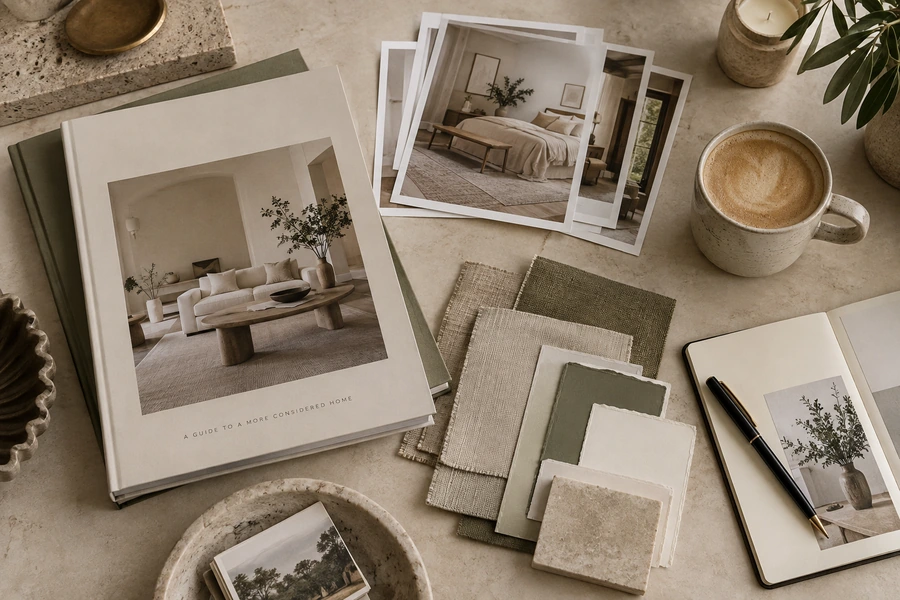
The first quarter should test positioning instead of chasing reach. Watch which editions sell and which rooms generate questions. Lead the homepage with whatever wins. Add adjacent titles rather than expanding into unrelated categories.
Your own photography can join the rotation later, sharing the same brand and palette. Some founders eventually add physical products once digital demand proves the audience exists. Others stay digital deliberately and keep the margins. An interior design influencer business compounds because home projects never finish. Resources like an interior design influencer without filming approach show how creators can build content around visual inspiration without constant production. Track revenue per subscriber instead of follower counts. Outcomes depend on effort and market conditions, and no pack guarantees results.





Leave a comment